






$100-$300/hr clinical and medical work, on your schedule
Review AI-drafted diagnoses, treatment plans, and clinical notes the way you'd check a resident's work: flag the dangerous call, defend the standard of care. Fully remote, a few hours a week, paid per task.
Trusted by top research companies








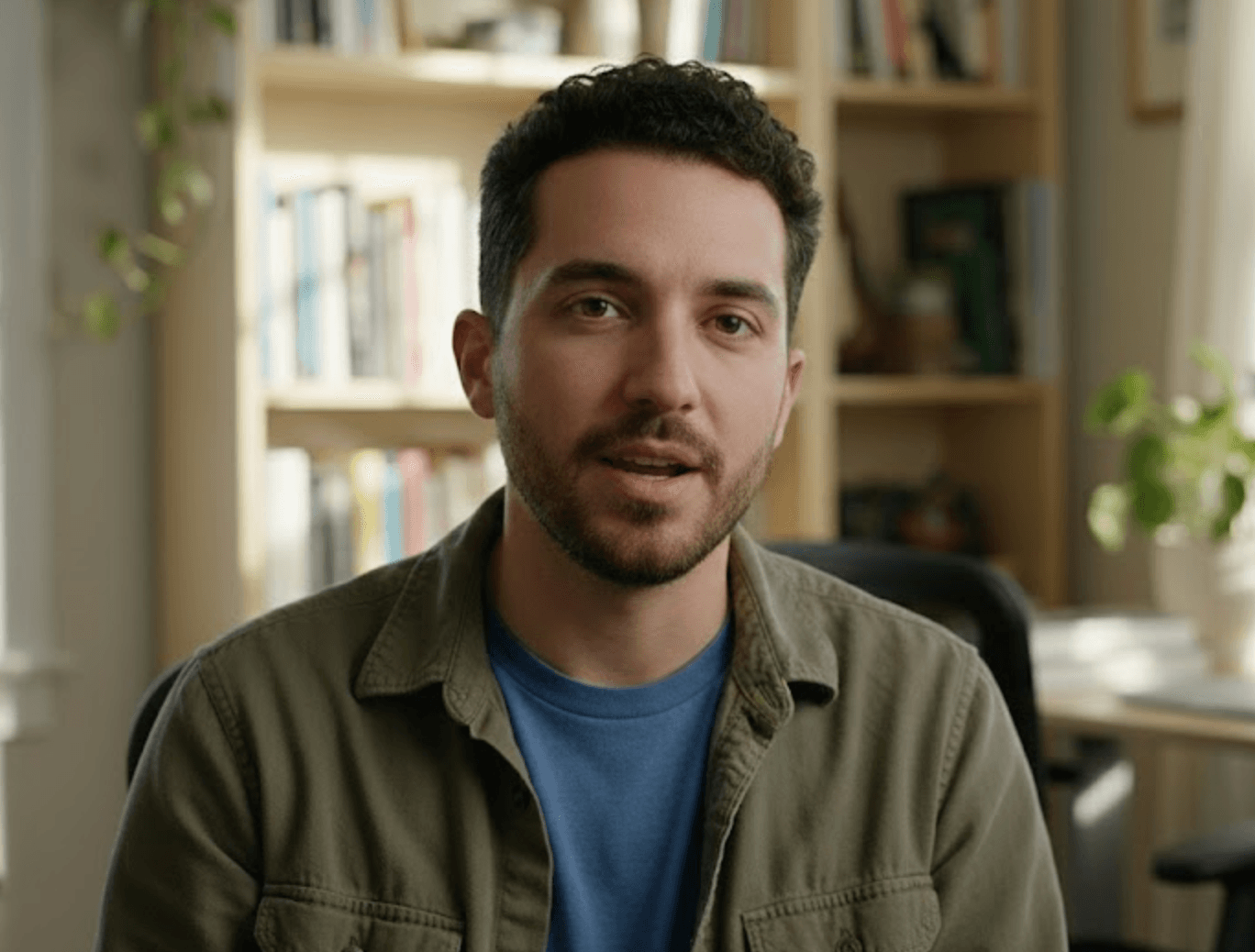
Hi, we're Zac and Jack, the founders of Terac. We want to talk to you directly, because you are the most important part of what we're building.
Terac is a community of experts. People who have spent years getting good at something specific and hard. The world is about to need more of you, not less. As AI takes on more of the world's work, the bottleneck shifts to the people who actually know what they're talking about.
Expert labor is the rarest resource in the world right now, and it is shockingly hard to find. The companies that need an attending's eye on a missed differential spend weeks chasing people, paying placement fees, and settling for whoever is available. Meanwhile thousands of qualified people are sitting with knowledge that no one ever asks for.
That gap is what we're here to close. Every project that lands on Terac is routed to the people who actually know the answer, on their schedule, paid fairly, and only when the work is verified. No middleman taking a cut of your time. No vague gigs. No chasing checks.
We care about every single person in this community. If you join Terac, you're not a row in a database to us. We read the feedback. We answer the emails. We will fight for you when a customer is being unreasonable, and we will be honest with you when something on our side is broken. The quality of this panel is our entire company, and we owe you a serious bar.
If you've made it this far, here is what we're asking: claim your profile. Put your expertise on the record. Let the world's most ambitious teams come find you for the work only you can do.
Physicians questions
Still curious? Write to us at support@terac.com.
Subspecialty depth is what makes you valuable. Models fail most at the boundary between general medicine and high-acuity specialty reasoning, so a fellowship-trained reviewer catches errors a generalist would miss entirely. ACGME-accredited subspecialty fellowships are among the most in-demand credentials.
An active, unrestricted license in any U.S. state is the baseline, because Terac verifies credentials against state board records before you start. A retired or inactive license would need to be reinstated to active status to qualify.
No. Every task uses de-identified, fictional, or synthetic scenarios built for model training, and you evaluate a model's reasoning rather than advise on real care. The work stays outside the physician-patient relationship, so it carries no duty-to-warn or standard-of-care obligation.
You'll judge AI-drafted differentials and reasoning chains against guidelines like UpToDate, ACC/AHA, or USPSTF, review machine-written H&Ps and discharge summaries for accuracy and ICD-10 logic, and write worked examples of attending-level reasoning. Some tasks stress-test outputs on pharmacokinetics, interactions, or rare-disease recognition.
Yes. DO degrees and AOA certifications are treated the same as MD and ABMS. What matters is that your training, license, and board certification match the clinical domain being evaluated, not the certifying body you went through.
Why your expertise matters
Today's medical AI orders from a differential it can recite but cannot weigh, misses how one comorbidity changes everything, and trusts the obvious answer when the obvious answer is wrong. Catching that takes a working clinician, not a literature search. Your corrections teach these tools the judgment a textbook leaves out.
How pay works
High-acuity specialists - emergency, critical care, surgery, oncology - who can narrate their reasoning land at the top of the $100-$300/hr band. Work is fully remote and paid per verified task, no minimum hours, so you fit sessions around clinic.
What the work looks like
A sample of the clinical and medical work you would pick up. Every project is scoped, remote, and paid on verified completion.
- Check an AI-drafted chest pain note for reasoning that breaks from AHA STEMI guidelines without justification.
- Rank a model's differential for an undifferentiated fever by plausibility given the stated exam and labs.
- Write a worked example of your approach to altered mental status, from first impression to disposition.
- Judge whether an AI-drafted anticoagulation handout conveys bleeding risk a patient could act on safely.
- Catch dosing errors in machine-written antibiotic recommendations for a patient with a penicillin allergy.
- Score a model's answers to new-diabetes patient questions for accuracy, completeness, and urgency.
Specialties we match
Physicians projects span a wide range of focus areas. Tell us where you go deep and we route the work that fits.
- Clinical differential diagnosis
- Evidence-based medicine (EBM)
- ICD-10 / CPT coding accuracy
- SOAP note and H&P documentation
- UpToDate / PubMed literature appraisal
- Drug-drug interaction review
- AHA / ACC / IDSA guideline interpretation
- Radiology and lab result interpretation
- Procedural risk-benefit counseling
- CMS quality metrics (MIPS, HEDIS)
- Shared decision-making frameworks
- Medical ethics and informed consent